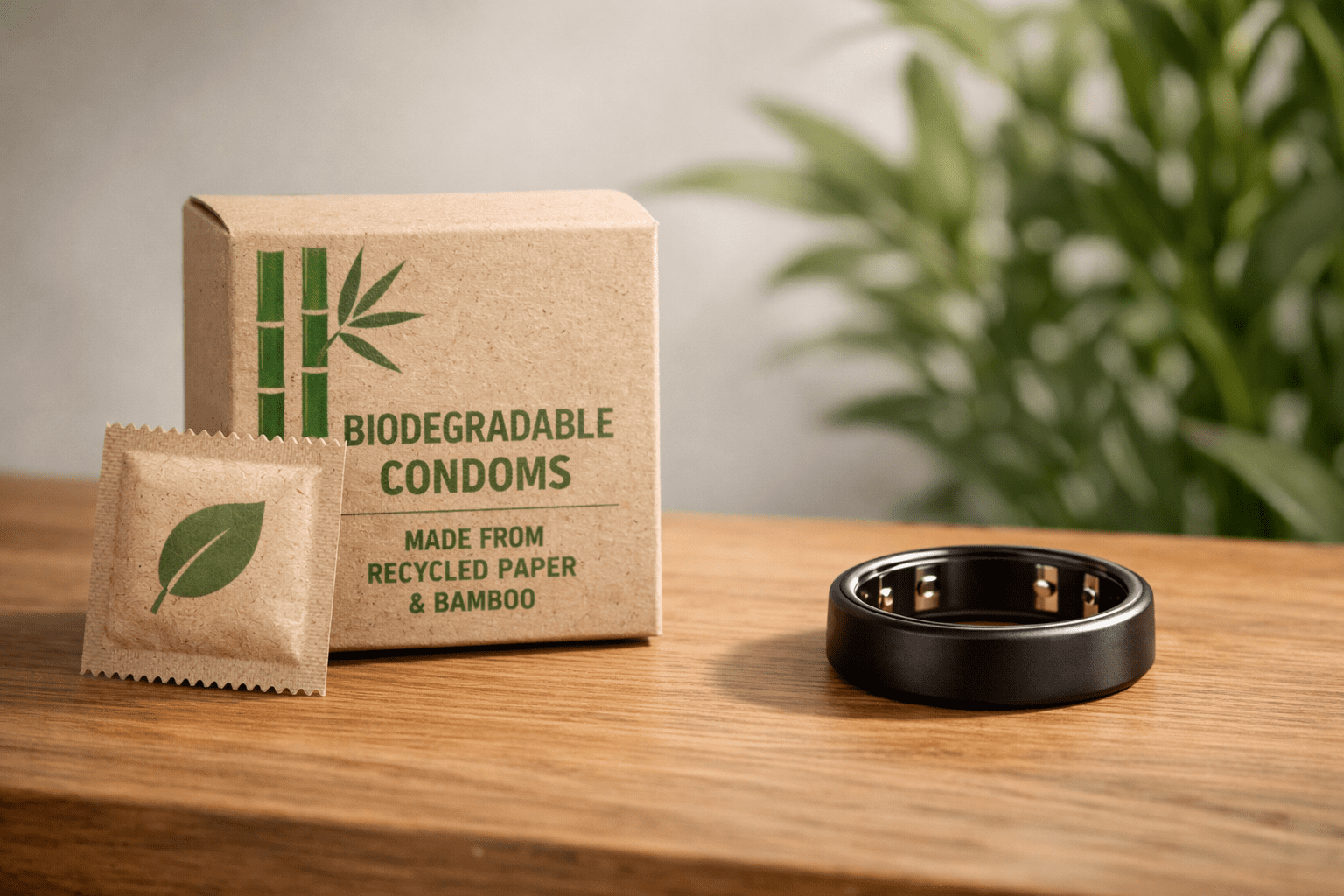
The year 2026 marks a revolutionary shift in reproductive health. We are no longer just asking if a contraceptive method is effective; we are asking if it is ethical, sustainable, and harmonious with our bodies. Sustainable Contraception Trends 2026 represent the intersection of high-tech medical science and deep environmental consciousness. As the world moves toward a “Net Zero” future, even our most intimate choices are evolving to reflect our commitment to the planet.
In this exhaustive guide, we will analyze why sustainable family planning has become the new global gold standard and how these innovations are empowering individuals while protecting the Earth.
The Environmental Crisis in Sexual Health
To understand the importance of Sustainable Contraception Trends 2026, we must first look at the waste generated by traditional methods. Every year, billions of latex condoms and plastic pill blisters end up in landfills or oceans. Traditional latex is often processed with chemicals that prevent it from biodegrading quickly, and the plastic waste from thousands of birth control pills is staggering.
In response to this, the 2026 market has pivoted. We are seeing a “Green Revolution” in the bedroom, where products are designed for the circular economy.
1. The Rise of Biodegradable and Vegan Barriers
One of the leading Sustainable Contraception Trends 2026 is the mainstream adoption of eco-friendly condoms.
Natural Latex and Bamboo Fibers
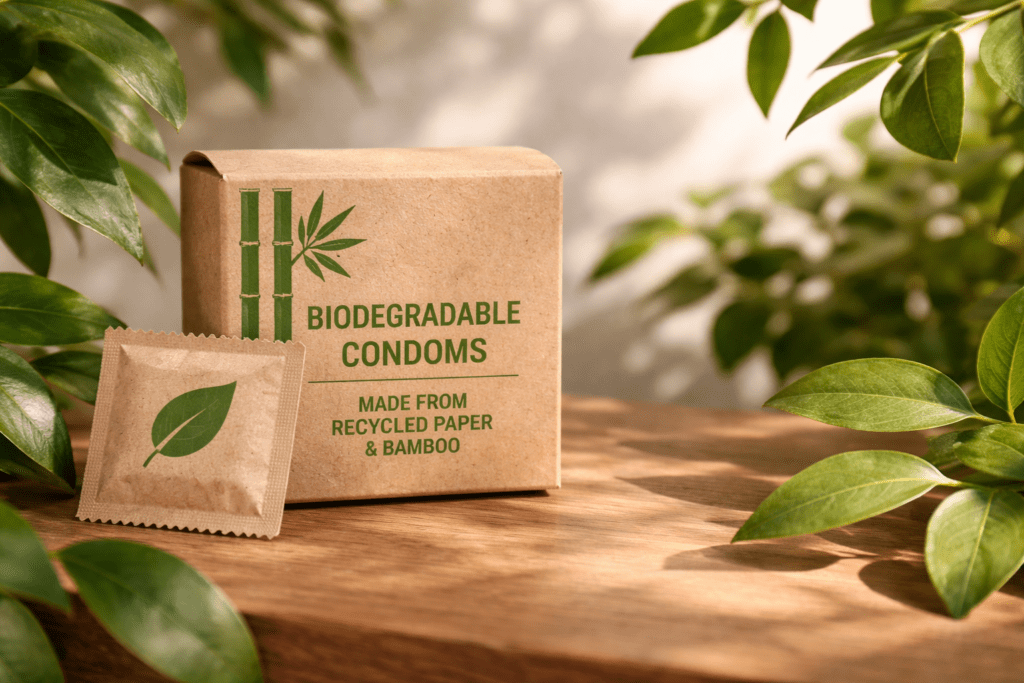
Modern condoms in 2026 are made from sustainably harvested natural rubber latex, often sourced from FSC-certified forests. Unlike older versions, these are free from casein (a milk protein), making them 100% vegan. Some boutique brands are even experimenting with bamboo-infused fibers that offer superior strength while being fully compostable within 6 to 12 months.
Non-Toxic Lubricants
Sustainability isn’t just about the wrapper; it’s about the ingredients. In 2026, consumers are moving away from silicone-based lubricants toward organic, water-based options that use aloe vera and plant-derived glycerin. These products are better for the body’s pH balance and leave no chemical footprint in our water systems.
2. AI-Driven Fertility Awareness: The Zero-Waste Alternative
The most sustainable method is the one that produces zero physical waste. This is why AI-driven fertility tracking is a dominant part of Sustainable Contraception Trends 2026.
Beyond Simple Apps
The “Calendar Method” has been replaced by sophisticated AI algorithms. In 2026, users employ wearable sensors—such as rings or skin patches—that track basal body temperature, heart rate variability (HRV), and even the chemical composition of sweat. These sensors provide a 99.8% accurate window of fertility.
Digital Sovereignty and Privacy
A key component of Sustainable Contraception Trends 2026 is the protection of user data. Modern apps now use “Local-Only AI,” meaning your intimate health data never leaves your device. This adds a layer of psychological safety to physical health.
Learn about Intimacy Psychology & Mental Health in 2026
3. The Male Contraceptive Breakthrough: Sharing the Burden
For decades, the environmental and physical burden of contraception fell mostly on women. One of the most significant Sustainable Contraception Trends 2026 is the arrival of effective, reversible male contraceptives.
Reversible Gels (Vasalgel Successors)
In 2026, non-hormonal gels that block sperm flow are widely available. These gels are injected once and can be reversed at any time with a simple dissolving solution. Because they are non-hormonal, they don’t have the same environmental runoff issues (estrogen in water systems) that traditional pills do.
The Male “Daily” Pill
New plant-based compounds have led to the first eco-conscious male birth control pill. It disrupts sperm motility without altering testosterone levels, representing a huge step forward in gender-neutral family planning.
4. Plastic-Free Packaging and Circular Delivery Models
Innovation in Sustainable Contraception Trends 2026 also includes how we receive our products.
Refillable Systems: Birth control pill users in 2026 now receive high-end, refillable glass or metal cases, with “naked” pills delivered in compostable paper sachets.
Subscription Recycling: Condom brands now offer “Return-to-Source” programs for their packaging, ensuring that even the tiny wrappers are recycled into new industrial materials.

5. Telehealth and Global Education
Sustainability also means “social sustainability.” Access to education is vital. In 2026, AI-driven telehealth platforms provide free, anonymous consultations in over 50 languages. This ensures that Sustainable Contraception Trends 2026 reach developing nations, helping to manage population growth through informed, eco-friendly choices.
The Psychological Shift: Mindfulness in Intimacy
We are seeing a trend toward “Slow Intimacy.” Much like the slow-food movement, this encourages couples to be more mindful of their choices. Choosing a sustainable method of family planning is seen as an act of love—not just for each other, but for the future generation.
Comparison Table: Eco-Impact of Contraception Methods 2026
| Method | Waste Level | Chemical Footprint | Best For |
| Traditional Pill | High (Plastic/Hormones) | High | Convenience seekers |
| Eco-Barrier (Condom) | Low (Biodegradable) | Zero | Dual protection |
| AI-Fertility Ring | Zero (Electronic) | Zero | Long-term couples |
| Male Gel (Reversible) | Low (Medical) | Low | Long-term responsibility |
6. Bio-Identical Hormones: A Healthier Choice for Women
For those who still prefer hormonal methods, Sustainable Contraception Trends 2026 have introduced “Bio-Identical” hormones. These are derived from plants like wild yams and are molecularly identical to the hormones produced by the human body. They have fewer side effects and are more easily processed by the environment once they leave the body.
Visit The UN Population Fund for Global Reproductive Statistics
7. The Role of “Green Influencers” in Sexual Health
In 2026, the trend is being pushed by “Sexual Wellness Educators” who focus on sustainability. They are de-stigmatizing talk about periods, sperm health, and waste-free sex. This cultural shift is making Sustainable Contraception Trends 2026 the “cool” and responsible choice for Gen Z and Alpha.
Conclusion: A Future Built on Informed Choice
As we navigate through 2026, it is clear that our health and the health of the planet are inextricably linked. Sustainable Contraception Trends 2026 prove that innovation doesn’t have to come at the cost of the environment. By choosing biodegradable barriers, embracing AI-driven tracking, or supporting male-led options, we are all contributing to a more sustainable world.